The Strategic Advantage of KDP Accounting Ledger Interiors for Modern Creators
In the dynamic ecosystem of Amazon's Kindle Direct Publishing (KDP), success often hinges on efficiency, quality, and scalability. For entrepreneurs and creators focused on the low and no-content book market, tools that streamline production while ensuring professional output are indispensable. The Accounting Ledger Log Book KDP Interior represents precisely such a tool—a meticulously designed, pre-formatted template that transforms a simple concept into a market-ready product. It is more than just a ledger layout; it is a foundational asset for building a publishing business with velocity and precision.
Understanding the Accounting Ledger Log Book KDP Interior
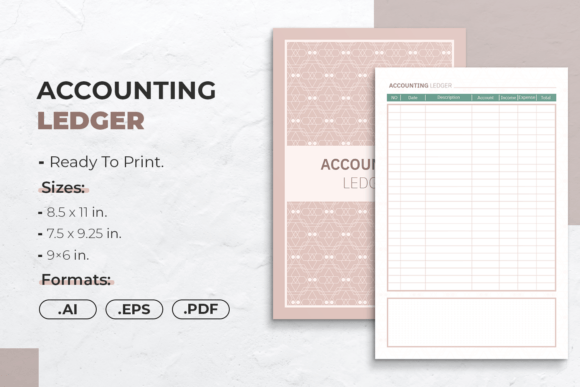
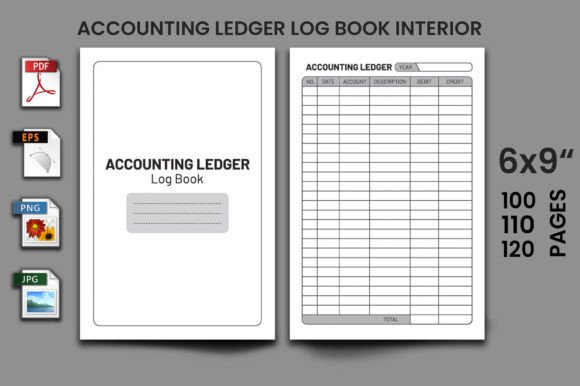
An Accounting Ledger Log Book KDP Interior is a complete, print-ready file designed specifically for publication through Amazon KDP. This interior package provides the structured pages of an accounting ledger—typically columns for date, description, debit, credit, and balance—within a professionally formatted document. The key distinction from a generic template is its KDP-specific optimization. Files are tested on Amazon's platform, formatted to standard trim sizes like 6"x9", and configured with or without bleed as required. The offering includes multiple file formats (PDF, EPS, PNG, JPG, source files) and page count variations (100, 110, 120 pages), providing a versatile core product that can be adapted and branded.
This product eliminates the most time-consuming aspects of low-content book creation: design, layout, and technical testing. By providing a 100 vector editable resizable PDF, it empowers creators to change sizes easily and customize elements without losing quality, thanks to vector Adobe Illustrator support. It is ready for use as a notebook, journal, diary, and is immediately ready for printing. The promise is simple: a high-quality, print-ready PDF that has been tested on Amazon KDP, reducing the risk of upload errors and ensuring a smooth path from concept to marketplace.
Alignment with Publishing Trends and Market Movements
The relevance of the Accounting Ledger KDP Interior is deeply intertwined with broader trends in self-publishing, entrepreneurship, and digital craftsmanship. The low and no-content book sector on Amazon has matured from a novelty into a substantial niche market. Consumers seek functional, physical tools for productivity, finance management, and organization, even in an increasingly digital world. This creates a persistent demand for ledgers, planners, and logbooks.
Simultaneously, the "creator economy" has expanded, where individuals leverage digital platforms to build micro-businesses. KDP publishing is a prime channel for this. The trend is towards professionalization; customers expect books that look polished and function correctly, not amateurish drafts. Therefore, creators need resources that elevate their product quality while allowing them to operate at scale. The pre-tested, customizable interior fits this need perfectly, aligning with the trend towards tool-enabled creativity—where software and templates empower individuals to produce work at a professional level.
From a technology perspective, the shift towards vector-based, editable assets reflects a demand for flexibility. Unlike static images, vector files allow resizing and modification without quality degradation, which is crucial for creators who wish to adapt a single asset for multiple book sizes or special editions. This adaptability connects to a larger development in digital goods: the move towards modular, reusable components that maximize ROI on creative effort.
Why Professionals Are Paying Attention
The attention from professionals, marketers, and freelancers stems from practical business calculus. Time is the scarcest resource for a solopreneur. Designing a ledger interior from scratch requires competency in graphic design, understanding of KDP's complex formatting rules, and hours of labor. Each upload carries the risk of rejection due to technical errors. A pre-tested Accounting Ledger Log Book KDP Interior mitigates these risks and compresses the timeline from idea to live product dramatically.
Moreover, it enables focus on business growth activities. Instead of being bogged down in design, a creator can concentrate on market research, branding, building a portfolio of titles, and marketing. This interior acts as a reliable, repeatable component in a publishing system. For those aiming to "grow fastly" their KDP business, as the product description notes, such speed is achieved through eliminating bottlenecks. The interior is not merely a product; it is a productivity engine.
Changing Needs and Workflows in KDP Publishing
The expectations of KDP creators have evolved significantly. Early in the platform's life, simple PDFs might suffice. Now, with increased competition, workflow expectations have shifted towards efficiency, consistency, and quality control. Creators need to manage entire catalogs of books, not just single titles. This requires workflows that are replicable and scalable.
A customizable, vector-based interior directly addresses these changing workflow needs. It serves as a master template. A creator can purchase the Accounting Ledger Log Book KDP Interior, customize the cover page, adjust colors or fonts using the source files, and potentially resize it for different trim sizes, creating multiple unique products from one core asset. This modular approach is a hallmark of modern digital product creation. It also aligns with a preference for over-the-counter solutions that are ready for immediate deployment but retain flexibility for differentiation.
Furthermore, the expectation for "ready for printing upload" is paramount. Amazon KDP's upload process can be stringent. Files must meet exact specifications for trim size, bleed, margins, and resolution. An interior that is already tested and formatted eliminates the trial-and-error phase, which can be frustrating and time-consuming for new publishers. This reliability meets the professional's need for predictable, successful outcomes.
Practical Applications and Observations
Consider a freelance graphic designer who wants to expand into publishing. They have design skills but lack time to build every interior from zero. Using this ledger interior, they can quickly produce a professional accounting log book, applying their unique branding to the cover and perhaps the header sections of the interior using the editable source files. They can launch this product within days, not weeks.
Or, observe a small business coach who sells physical planners and ledgers as complementary products to their clients. They need a reliable, clean ledger to offer. By utilizing a pre-formatted, tested interior, they ensure the product is functionally sound—the columns align, pages number correctly, and it prints perfectly—which maintains their brand's reputation for quality. They can focus on their core coaching service while easily outsourcing the book production to a trusted template.
The inclusion of multiple page counts (100, 110, 120 pages) is a subtle but important practical feature. It allows creators to target different price points and customer preferences without redesigning the core structure. A 120-page ledger can be marketed as a "deluxe edition," adding perceived value without extra design work.
Connecting to Larger Developments in Creator Tools
The rise of products like the Accounting Ledger KDP Interior is part of a larger movement: the commoditization of high-quality creative foundations. Similar to stock photography, website templates, or social media content packs, these interiors are stock assets for the publishing world. They represent the industrialization of the creator's toolkit, providing standardized parts that individuals can assemble into unique final products.
This development mirrors advances in other fields where platforms provide the infrastructure (like KDP's printing and distribution network), and third-party providers supply the optimized components (like tested interiors) to help creators succeed. It's a symbiotic ecosystem. The availability of such specialized tools lowers the barrier to entry while raising the average quality of products in the marketplace, benefiting both creators and consumers.
Furthermore, the emphasis on vector files and source files speaks to a growing sophistication among creators. They are no longer just end-users; they are modifiers and adapters. The tool provides the raw material (the vector design) and expects the creator to add their final touch. This reflects a shift from passive consumption of tools to active collaboration with them, a trend visible across software, from Canva templates to WordPress themes.
The Path Forward: Efficiency as a Competitive Edge
For the professional, marketer, or entrepreneur engaged in KDP publishing, the ultimate insight is that competitive advantage now often lies in operational efficiency. The Accounting Ledger Log Book KDP Interior is a direct investment in that efficiency. It converts a fixed cost of time and design uncertainty into a variable, manageable cost of purchasing a proven asset.
As the low-content book market continues to grow, differentiation will come from branding, marketing, and niche selection, not from reinventing the basic layout of a ledger. Therefore, leveraging a professional interior allows the creator to allocate their creative capital where it has the highest impact: on strategy and brand building. The product is not just about selling a ledger; it's about building a publishing business that can scale fastly, as the description notes, by removing the foundational repetitive work.
In conclusion, the value of a KDP-specific accounting ledger interior transcends its pages. It is a strategic tool aligned with the trends of the creator economy, professionalization of self-publishing, and the demand for flexible, reliable digital assets. For anyone serious about building a presence in Amazon KDP, such resources are not just convenient; they are essential components of a streamlined, scalable, and professional publishing workflow.