Word Search Games as Educational Design Assets
What transforms a simple educational activity into an engaging, visually compelling piece of learning material? The answer lies in thoughtful design, where aesthetics and pedagogy merge to create an experience that both teaches and delights.
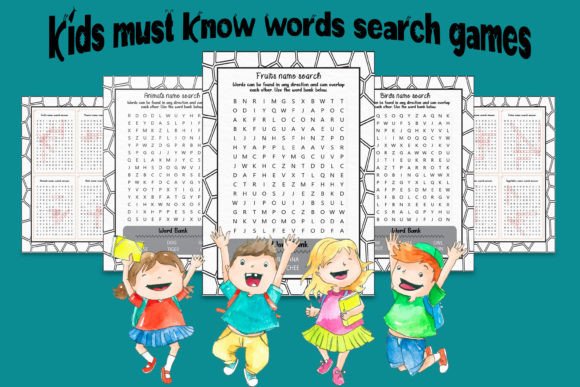
Consider the Kids Must Know Words Search Games package. At its core, it’s a teaching material disguised as fun puzzle games, where kids explore eight categories—including fruits, flowers, animals, and sea creatures—with six names in each. But from a professional graphic design perspective, this represents a complete suite of versatile creative assets. The included files—print-ready PDFs, high-resolution 300 dpi JPGs, and transparent PNGs—are not just content; they are foundational components for building stronger visual communication.
The Visual Foundation of Educational Content
High-quality, print-ready design assets are crucial for any project aiming to hold a child's attention while delivering educational value. The specification of 8.5 x 11 inches with no bleed and KDP testing speaks directly to usability, ensuring these assets integrate seamlessly into both digital and physical creative projects.
This focus on technical quality is what separates amateur resources from professional ones. The 300 dpi resolution guarantees crisp clarity whether the game is printed for a classroom handout or incorporated into a digital app interface. The transparent PNG files offer immense flexibility, allowing designers to layer these puzzles onto various backgrounds for branding purposes or to match existing color palettes.
Practical Applications in Creative Workflows
For designers, marketers, and content creators, such a resource transcends its immediate use. It becomes a modular element that can elevate a wide range of projects:
- Branding & Educational Publishing: The clean layouts can be adapted to reinforce a brand’s identity within children’s educational materials, ensuring visual consistency across worksheets, books, and apps.
- Digital Marketing & Social Media Graphics: Individual puzzles or categories can be repurposed as engaging social media posts or email newsletter content for brands focused on parenting, education, or child development.
- Website & UI Design: Elements from the games can be integrated into educational website sections, acting as interactive components that improve user engagement and experience.
- Packaging & Merchandise Design: For products targeting children, imagery and layouts from these puzzles can inform packaging design, creating a familiar and fun visual connection for young users.
This versatility underscores the importance of sourcing design assets that are both aesthetically pleasing and functionally robust. The structured categories and provided answers add a layer of editorial design precision, making the content easy for parents and teachers to navigate.
Design Principles in Action
Evaluating such a product from a design standpoint involves several key factors. Scalability is paramount—the assets must work at various sizes without losing integrity. Visual hierarchy is clearly addressed through the categorization and clear answer sections, guiding the learner’s eye logically through the activity. Readability is the cornerstone of any educational puzzle; the typography and layout must be clean and accessible to young readers.
Furthermore, these assets demonstrate how a cohesive modern aesthetic and professional presentation can make educational content feel premium and trustworthy. By providing a complete, tested package, it streamlines the design workflow for creators, allowing them to focus on application and customization rather than asset creation from scratch.
Ultimately, whether you’re designing a new educational brand, enhancing an existing one, or creating engaging content for young audiences, the quality of your underlying creative assets dictates the final impact. Tools like the Kids Must Know Words Search Games package exemplify how well-structured, high-fidelity design resources not only solve immediate creative needs but also become integral parts of a broader, more effective visual communication strategy. They remind us that in design, clarity, usability, and visual appeal are not just decorative choices—they are essential components of successful communication and engagement.