The Ultimate Guide to Letter Tracing Practice for Kids: Building Foundational Skills
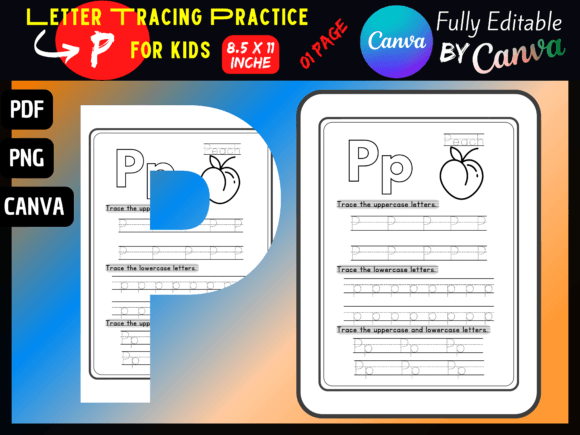
The journey to literacy begins with a single line. For young learners, mastering the alphabet is a monumental first step, and the method of learning can make all the difference. This is where targeted resources like Letter Tracing Practice for Kids -P come into play. This printable alphabet tracing worksheet is more than just a sheet of paper; it's a carefully designed tool that supports toddlers, preschoolers, and children of all ages in learning their alphabet letters while concurrently developing essential pencil control and fine motor skills.
Understanding the Core Challenge: Early Writing Development
Parents, educators, and caregivers face a common, crucial challenge: how to introduce writing in a way that is engaging, effective, and frustration-free. The act of writing is complex, requiring the integration of cognitive recognition (knowing the letter) with physical execution (forming the letter). For a child, holding a pencil correctly and navigating the curves of a 'P' or the lines of an 'L' can be daunting. The goal is clear—to build a strong foundation for future reading and writing—but the path needs to be structured and supportive. Unstructured practice can lead to poor habits, while overly rigid instruction can stifle enthusiasm.
How Letter Tracing Practice for Kids -P Addresses These Needs
The Letter Tracing Practice for Kids -P worksheet is engineered to bridge the gap between knowing and doing. By focusing on both uppercase and lowercase letter writing practice, it provides a comprehensive approach. The dotted tracing lines serve as a guide, allowing the child to follow a path with their pencil, building muscle memory and confidence with each successful trace. This repetitive, guided practice is key for developing the basic pencil skills that are the bedrock of handwriting. Furthermore, presenting the letter 'P' in isolation allows for concentrated practice, preventing overwhelm and enabling mastery of one shape before moving to others.
Practical Applications and Outcomes for Different Users
The utility of this resource extends across various settings and needs.
For parents at home, it offers a ready-to-use, high-quality activity that can be seamlessly integrated into daily learning routines. It’s a solution for rainy days, quiet time, or structured homeschool sessions. The outcome is not just a child who can write a 'P', but a child who gains a sense of accomplishment, improves their hand-eye coordination, and becomes more prepared for formal schooling.
For educators and preschool teachers, the worksheet acts as a versatile classroom tool. It can be used for individual practice, small group work, or as part of a larger letter-of-the-week curriculum. The editable nature of the template—available through a free Canva account—means it can be adapted. Perhaps an educator wants to enlarge the letters for a child needing bigger guides or add a student's name to the top for personalization. This flexibility supports differentiated instruction, catering to the diverse developmental speeds within any group of children.
For content creators and sellers on platforms like KDP (Kindle Direct Publishing)
The specification that it is ready for upload to KDP and comes as a high-quality print-ready PDF speaks to a practical need for entrepreneurs. They receive a product that has been tested, ensuring it meets platform standards for dimensions (8.5 x 11 inches) and bleed settings. This removes the technical guesswork and allows them to focus on marketing and distribution, providing valuable educational resources to a wider audience. While the focus is on outcomes, certain features inherently enable those positive results. The inclusion of both uppercase and lowercase 'P' teaches letter case association—a fundamental literacy concept. The single-page design makes it manageable and non-intimidating. The provision of multiple file types (PDF, PNG, and an editable Canva link) ensures maximum utility. A parent can print the PDF instantly. A designer can use the PNG in a digital presentation. A seller can customize the template in Canva to create a whole series, perhaps expanding from Letter Tracing Practice for Kids -P to a complete A-Z workbook. To maximize the benefits of this tracing practice, consider these approaches. Begin with a discussion about the letter 'P', its sound, and words that start with it. This contextualizes the activity. Ensure the child is using a proper, comfortable grip—sometimes triangle-shaped pencils or grips can help. Encourage them to say the letter sound as they trace, linking the motor skill with phonemic awareness. Start with finger tracing on the page before using a pencil to engage tactile senses. Most importantly, celebrate effort and progress, not just perfection. The goal is development, not flawless execution on the first try. Letter Tracing Practice for Kids -P is a powerful starting point, but it is ideally part of a broader ecosystem of learning. After tracing, children can practice writing the letter 'P' independently on blank paper. They can hunt for 'P's in books or on signs around the house. They can create art using the letter shape. The editable Canva template allows this single worksheet to be a springboard. You could create a matching game by adding images of a pig, a pen, or a pie next to the traced letter. The key is to move from guided practice to applied knowledge, solidifying the learning. Ultimately, resources like this printable alphabet tracing worksheet solve a very real problem for adults tasked with guiding early learning. They provide a structured, adaptable, and professional-quality tool that directly addresses the developmental needs of children. Whether you are a parent looking for a quiet afternoon activity, a teacher building your curriculum library, or an entrepreneur creating educational products, Letter Tracing Practice for Kids -P offers a practical, effective solution for nurturing the foundational skills of literacy and pencil mastery in the young learners in your care.Key Features That Drive Real-World Usefulness
Recommendations for Implementation
Beyond the Worksheet: Building a Comprehensive Learning Journey
🔗 You Might Also Like