The Editable Gratitude Journal Template for Creators
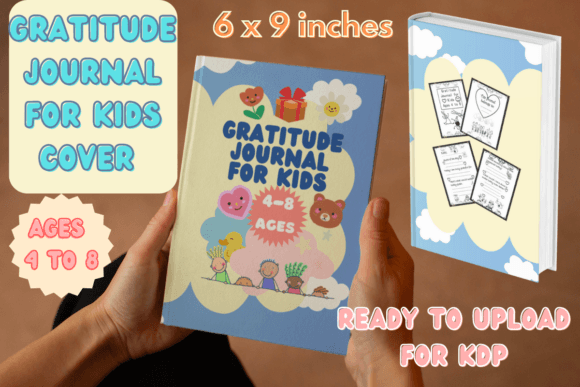
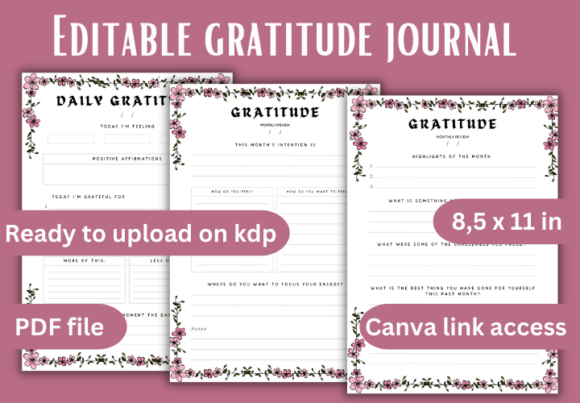
The creative market thrives on products that are both beautiful and functional, ready to empower other creators. In this space, an Editable Gratitude Journal Template stands out as a foundational tool. This isn't just a static PDF; it’s a designed framework waiting for your personal or brand touch. Imagine a professionally formatted journal interior, featuring clean layouts, elegant section headers for daily and monthly reflections, and thoughtful prompts, all housed within a cohesive 120-page structure.
Its visual characteristics lean towards a modern, minimalist aesthetic. The style is clean and approachable, designed for readability first, with space for customization. The overall appeal lies in its duality: it presents as a polished, ready-to-print product for the end-user, while simultaneously serving as a versatile canvas for the publisher or designer. The personality of the final journal is ultimately yours to define—you can infuse it with warmth, sophistication, or vibrant energy through your edits.
A Ready-Made Asset for Diverse Creative Ventures
Where does this editable template work best? Its applications span the entire spectrum from personal passion projects to commercial business engines.
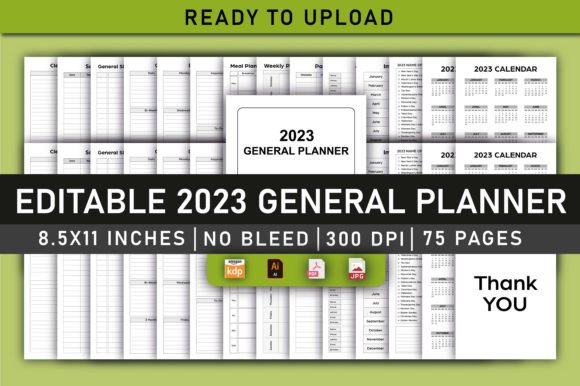
For the entrepreneur or small business owner focusing on low or no-content publishing, this template is a direct route to market. It’s already formatted and tested for KDP (Kindle Direct Publishing), meeting the specific 8.5 x 11 in. requirements, which eliminates a major technical hurdle. For designers and brand strategists, it serves as a premium starting point for brand identity projects. You can adapt the journal to reflect a client’s visual language, creating a custom-branded wellness product.
Content creators, bloggers, and marketers can use it to develop unique physical products that complement their digital presence, fostering deeper audience engagement. Crafters and hobbyists might see it as a beautiful base to further embellish and personalize. The provided Canva link access is key here, placing powerful, user-friendly editing tools directly into your hands, regardless of your professional design background.
Beyond the Template: Building Consistency and Trust
Utilizing a well-structured Editable Gratitude Journal Template does more than just save time. It influences the perceived value and success of the final product in critical ways.
First, it establishes a strong visual hierarchy. The template is pre-built with clear distinctions between daily logs, monthly overviews, and prompting questions. This inherent organization guides the user intuitively, enhancing the usability and readability of the journal. A messy, poorly structured journal can frustrate; a clear one invites consistent use.
Second, it provides a foundation for brand consistency and professionalism. When you customize this template for a commercial venture, you’re not building from a blank, unstable page. You’re applying your colors, logos, and chosen complementary fonts to a robust, tested layout. This results in a product that feels coherent and trustworthy. In the competitive world of self-publishing, that professional polish directly impacts brand perception and can drive recognition and repeat customers.
Practical Steps for Customization and Success
When you receive the editable files—the PDF and the Canva link—your creative process begins. Here’s how to approach it with a strategic eye.
Evaluate the Project Fit: Before editing, consider your audience. Is this journal for general consumers, a specific niche like busy professionals, or a corporate wellness program? The template’s neutral base supports all directions, but your customization choices (color palette, additional imagery, font pairings) should align with that target user’s expectations.
Test Your Design Adjustments: Use the Canva access to experiment. Try different font pairings for headers versus body text. Perhaps a clean sans serif font for prompts paired with a gentle script font for quotes. Always prioritize readability, especially for the daily writing sections. The template gives you the structure; you bring the typographic voice.
Review the Commercial Framework: A significant advantage is that this template is built for commercial use. It’s 100% formatted for KDP, meaning the margins, bleed, and page size are already correct. This is a practical, legal consideration that protects you from printing errors and platform rejection. You’re free to focus on design rather than technical specs.
From Template to Finished Product: A Real-World Example
Let’s walk through a realistic scenario. A lifestyle blogger wants to create a signature gratitude journal to sell to her community. She downloads the Editable Gratitude Journal Template. In Canva, she first replaces the placeholder header fonts with her brand’s signature display font, used in her logo. She then selects a complementary, highly readable serif font for all the prompt text to ensure clarity.
She adds her brand’s pastel color scheme to the section borders and page headers. She might insert a few of her own inspirational quotes on select pages, using a handwritten font to add a personal, authentic touch. Within an hour, she has a unique product that feels entirely hers, yet retains the professional editorial design and flow of the original template. She uploads the final PDF to KDP, confident it will print perfectly.
The Value of a Foundational Design Asset
Ultimately, this product transcends being just a “template.” It’s a design asset that accelerates creation. For the busy entrepreneur, it removes the barrier of complex layout design. For the creative professional, it provides a reliable substrate upon which to apply their artistic vision. Its 120-page length offers substance, suggesting a journey or a committed practice to the end-user.
Whether your goal is to build a publishing side business, enhance a brand’s product line, or simply create a beautiful personal project, the Editable Gratitude Journal Template offers a practical, elegant, and commercially sound starting point. It puts the focus where it should be: on your content, your brand, and your unique creative intent, supported by a foundation that already works.